Founded in 1984 by Holocaust survivors, the Dallas Holocaust and Human Rights Museum was created as a place of remembrance and a center for learning. From the beginning, the Museum has been guided by the belief that education plays a vital role in helping individuals understand the past, reflect on their responsibilities in the present, and contribute thoughtfully to their communities.
Through careful historical study and meaningful educational experiences, the Museum invites learners of all ages to consider how knowledge, empathy, and integrity shape the world around us.
History That Encourages Thoughtful Engagement
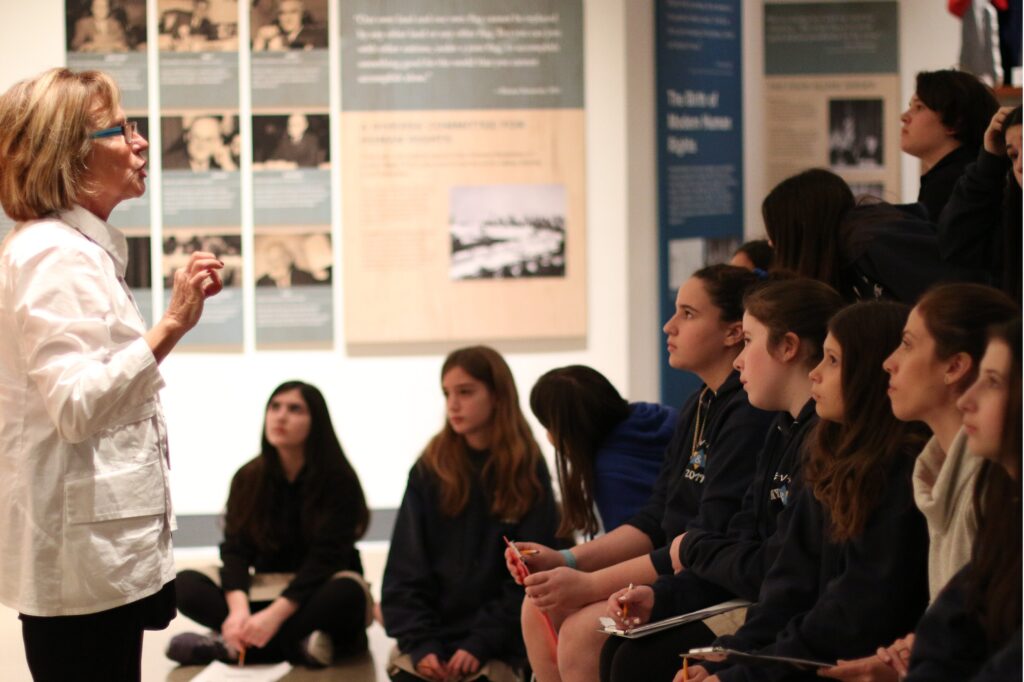
A visit to the Dallas Holocaust and Human Rights Museum offers students an immersive journey through some of the most significant events of the twentieth century.
Exhibitions explore the rise of Nazism, the persecution of Jews and other targeted groups, and the devastating consequences of the Holocaust. Additional galleries examine the aftermath of World War II, the development of international human rights principles, and the continuing effort to expand civil and human rights in the United States.
These topics are presented with care, accuracy, and age-appropriate context. Students are encouraged to engage with primary sources, examine historical evidence, and consider multiple perspectives.
The Museum helps students understand how real people were affected by these events and how individual actions — both positive and harmful — shaped outcomes.
Students learn that studying history is about understanding what happened and considering how people respond to challenges, treat one another, and make decisions during difficult times.
Education as a Foundation for Responsible Learning
Education is at the heart of the Museum’s mission. Each year, students participate in Museum field trips and virtual learning experiences designed to expand classroom learning.
Educators are also provided with classroom resources and professional development opportunities. Together, these programs support academic learning while encouraging students to ask questions, think critically, and engage respectfully with complex material.
Museum educators emphasize historical literacy skills such as analyzing sources and drawing conclusions from evidence. Students are guided to communicate their ideas clearly, listen to differing viewpoints, and approach challenging topics with curiosity and care.
This structured academic approach helps students develop habits that serve them well both inside and outside the classroom.
The Upstander Institute: Summer Learning with Meaning
This summer, the Museum is offering the Upstander Institute summer program, a pair of weeklong programs designed to deepen student engagement with history, leadership, and research.
These sessions offer students an opportunity to learn in a focused, supportive environment while exploring how individuals throughout history have responded to challenge and change.
The term Upstander describes individuals who recognize when something is wrong and respond thoughtfully and responsibly.
The Institute explores this concept through historical examples and guided reflection, helping students consider how knowledge, respect for others, and responsibility influence decision-making.
Leadership & Service | June 1–5
For Rising 9th–12th Graders
The Leadership & Service session is designed for high school students who want to better understand leadership as a practice grounded in responsibility and service to others.
Rather than focusing on authority or titles, the program emphasizes how leadership shows up in everyday actions — how people communicate, collaborate, and contribute positively within their communities.
Throughout the week, students participate in activities that build communication skills, teamwork, and problem-solving abilities.
Guided tours of the Dallas Holocaust and Human Rights Museum exhibitions highlight historical and contemporary figures who demonstrated perseverance and moral responsibility during challenging circumstances.
Students analyze these examples while considering context, choices, and outcomes.
A central component of the program is the Call to Action Plan, an educational project encouraging students to identify a challenge within their school or local community and propose a thoughtful response.
Students who complete the session receive an Upstander Leadership Certificate recognizing their participation and commitment.
History & Research | July 27–31
For Rising 7th–8th Graders
The History & Research session invites middle school students to explore history through inquiry and discovery.
Designed to build foundational research skills, this program introduces students to the work of historians and the process of examining the past thoughtfully.
Students tour the Dallas Holocaust and Human Rights Museum, analyze primary sources, and participate in hands-on lessons led by Museum educators.
They learn how to ask meaningful questions, organize information, and draw conclusions based on evidence.
Each participant selects a historical topic of interest and conducts guided research with educator support.
The program culminates in the creation of a model exhibition panel, allowing students to present their findings clearly and accurately.
This final project reinforces communication skills while emphasizing accuracy, effort, and respect for historical evidence.
Learning That Extends Beyond the Summer
Both sessions of the Upstander Institute are designed to support academic growth while building curiosity and confidence.
Participants engage in respectful discussion, collaborative learning, and thoughtful reflection. These experiences strengthen essential academic skills, including reading comprehension, writing, research, and effective communication.
Students also connect with peers who share a commitment to learning and personal growth.
In a supportive environment, they are encouraged to listen, ask questions, and consider different perspectives — an important part of developing mutual respect.
A Summer Experience with Lasting Impact
The Dallas Holocaust and Human Rights Museum was founded by survivors who believed deeply in the power of education to foster understanding and prevent future harm.
The Upstander Institute continues that mission by offering families a summer experience that is both enriching and purposeful.
By combining historical study with reflection and skill-building, the program helps students grow as learners and as members of their communities.
Families looking to explore more educational summer programs across North Texas can also attend the DFW Camp Expo events, where camps and academic enrichment programs connect with local families.
Ready to Join Us This Summer?
Registration is now open for the Upstander Institute at the Dallas Holocaust and Human Rights Museum.
With two engaging sessions designed for middle and high school students, the Institute offers a unique opportunity to explore history, build research skills, and grow in a supportive learning environment.
Space is limited to ensure a meaningful, hands-on experience for each participant. Families are encouraged to register early.
To learn more about the program, schedules, and registration details, visit the Dallas Holocaust and Human Rights Museum website.
This summer, invite your student to learn from history, engage with purpose, and participate in a program that inspires thoughtful learning and lasting growth.